October 2026 · 5 min read
Honeywell’s Forge Cognition keeps autonomy off
Key Definitions
Undo cost The money, time and escalation level needed to correct a wrong action; it sets the autonomy tier that action can occupy today.
Undo window The time between an action and the point where recovery is no longer possible; the shorter the window, the less room for human review.
Supervised mode The agent proposes and a person confirms before execution; on irreversible actions vendors ship it as a product line rather than a transition state.
At two in the morning, more than ninety per cent of the alarms in an office building are false, and eight or nine people per shift exist to clear them. Honeywell handed that job to an agent. In the same week it launched the product, its chief technology officer told reporters the autonomy mode was still switched off. The launch material says the agents can autonomously coordinate actions across existing systems. The interview says the supervised version will run for another two to three years, and that customers decide when to change that.
What the launch says, what the interview says
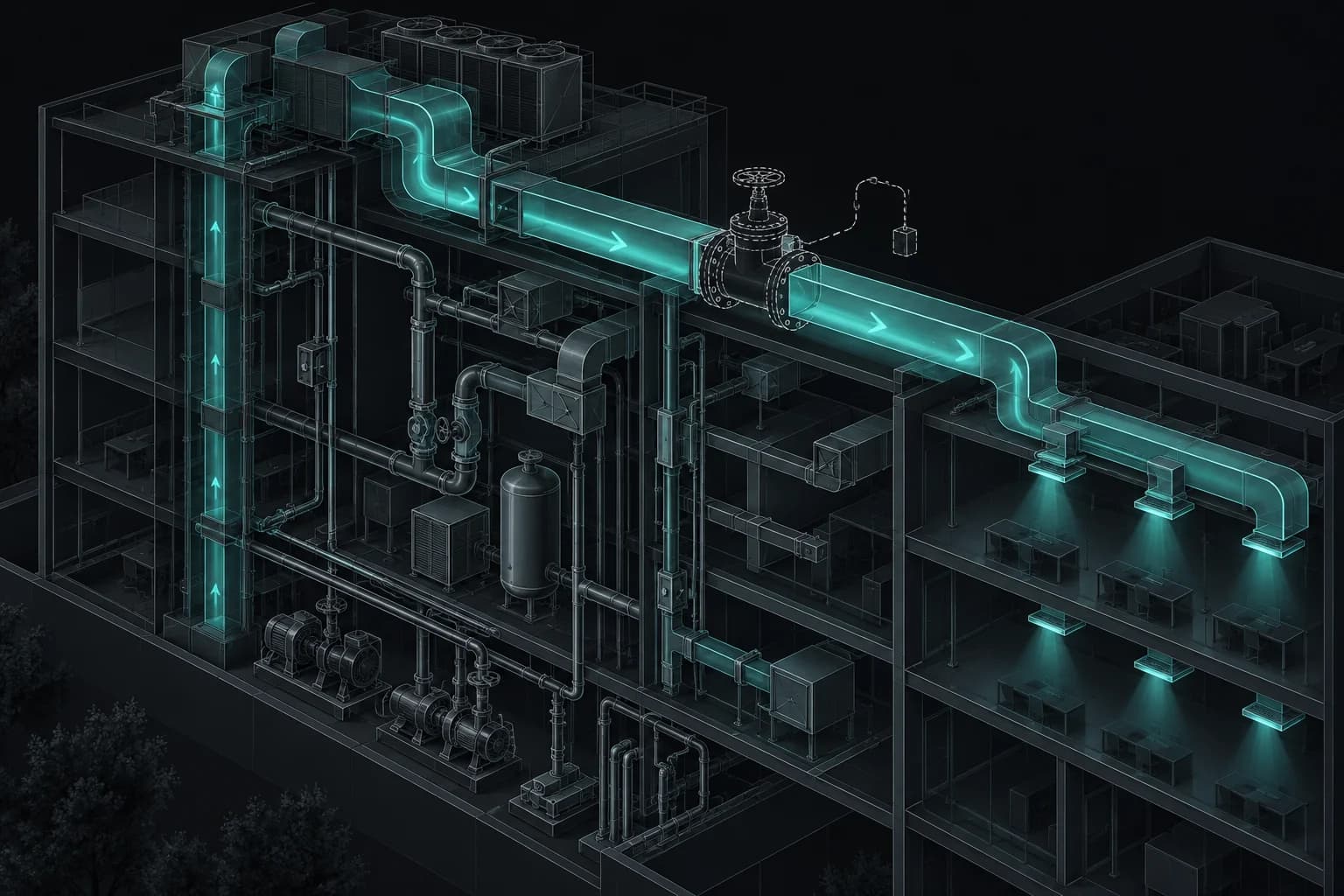
Honeywell announced Forge Cognition on 14 October, built with Nvidia and Dell, putting agents and digital twins on top of a building’s heating, cooling, security and power systems. The pitch is a brain behind the building: operators ask how a system is performing, then click into a simulated replica of the building down to a single floor, zone or machine.
In the same announcement, CTO Suresh Venkatarayalu drew the line plainly. Autonomy is not open yet, the supervised mode will probably run for two to three years, and customers decide when to switch. That does not contradict the launch copy. The two statements describe different things: the software can already work out what should happen, and the vendor is not yet willing to let it act alone.
The first live site is one of Nvidia’s own buildings. Between ninety and ninety-five per cent of the alarms in its security and access-control system were false, and Nvidia kept eight or nine people per shift clearing them. Honeywell took Nvidia’s open-source Nemotron model, retrained it on its own engineering knowledge to separate real alarms from noise, and says the result cut unnecessary building-management alerts by up to ninety per cent. In the same body of work, the two companies identified roughly ten per cent in efficiency gains.
Set those two statements side by side and the gap appears on the release side, not the reasoning side. To explain it, look at what happens when the action is wrong.
Why alarms came first
An alarm is the cheapest action to undo. When the agent gets one wrong, the cost is a few minutes of one operator’s attention, and the person is still in the loop and can overrule it. A bad call does not stop equipment and does not injure anyone.
Swap in another action and the arithmetic changes completely. Opening a valve, changing a temperature setpoint, or closing a fire door on a sensor reading carries a different downside: a mistake means stopping a line, investigating, and in some cases filing an incident. The vendor granting different autonomy to those two actions is the same calculation under two conditions, not an inconsistency.
That yields a testable rule. Whether a use case can run automatically depends less on how accurate the model is on that task than on three numbers: what it costs to undo a wrong action, how long the window to undo it stays open, and who holds the authority to stop. Multiply those and you get the tier the use case belongs in today. The rule also predicts where the next comparable case will appear: in the lowest-undo-cost step that also leaves a record of every judgement.
Sorting actions by reversibility
Line up the actions an agent could touch, ordered by the cost of undoing them, and three tiers fall out. Read and recommend comes first: reading data, producing a conclusion, drafting text, where a wrong call wastes a little time. Reversible writes come second: updating a record, sending a notice, opening a ticket, all undoable within minutes. Irreversible or physical actions come last: moving equipment, moving money, touching a safety-related switch.
The first two tiers are already within reach of today’s models. The third is not a question of how clever the model is but of who carries the irreversible consequence. It is also why the same model can run unattended inside a software system and only advise inside a physical building.
One uncomfortable corollary follows: autonomy in the physical world will trail pure software for a long time, even when both run the same model. The tier is set by the environment’s undo cost, and the environment does not improve when the model does. Buyers who prioritise agent projects by model quality tend to buy software that is not allowed to act in the places where acting matters most.
The contract deliverable is the customer’s feedback capacity
One clause structure in this partnership is easy to miss. According to the reporting, Nvidia will sign a service contract only after Honeywell’s forward-deployed engineers train Nvidia’s operations team and chief engineer to keep feeding the models. Payment is gated not on software going live but on the buyer growing the ability to maintain it.
The structure implies that installing a model on a customer site is not a delivery but an ongoing maintenance obligation. Site conditions change, equipment gets replaced, and the habits of the people on shift change too, so somebody has to keep sending feedback back. The vendor converts part of that obligation into a job capability on the buyer’s side.
The budget consequence is direct: alongside the licence fee, the cost table needs a line for feedback labour, naming who does it, how many hours a week, and what evidence they use to judge model performance. Leave that line out and on-site accuracy drifts, quietly. Drift does not raise an error. It slides from accurate to looks about right.
The delivery tempo is worth noting too. The building project reached what the report calls a critical point by August, and the stated next step is turning Nvidia from a pilot site into a paying customer. Time still passes between working and being paid for. Buyers building a similar budget are closer to reality if they plan for that lag than if they treat it as a surprise.
A new industry means retraining, not reconfiguring
The platform has picked twelve test sites across twelve industries, including a customer’s plant operations in Nigeria. The CTO’s account is that each new industry requires retraining the models for different problems and different goals.
That sentence gives away the cost of horizontal expansion. Moving the same platform from buildings to a chemical plant is not a configuration change. The objective, the data distribution and the acceptance criteria all start over. Equipment differs, tolerable risk differs, and what an operator will believe differs.
The common enterprise error is to read success at the first site as platform maturity, then price the second industry off a headcount ratio. The real effort is closer to running a small project per industry. When assessing a vendor, the useful question is not how many industries it supports but how long the last one took from arrival to steady state, and how much of that went into data and criteria.
Three numbers to answer before funding anything
Evaluating a project like this starts better with three numbers than with a leaderboard. First, undo cost: money, time and escalation level required when an action is wrong. Second, undo window: how long between the action and the point where recovery is no longer possible. Third, undo authority: who can stop it, and how the operation continues after the stop.
Projects that cannot produce those numbers usually cannot define acceptance criteria for a pilot either. The right move then is not buying software but walking the process once, writing down the cleanup path for a single wrong action: how many people, how many systems, how many days.
Projects that can produce them get their tier almost for free. Low undo cost, a long window and a stop authority that sits with a person puts a use case straight into the automatic tier. High cost or a short window keeps it in the recommendation tier until enough judgement records accumulate to argue for a promotion.
Supervised mode is a product with a multi-year life
Pushing autonomy out by two or three years is not an awkward wait for a vendor, it is a product line of its own. Under supervision the unit of billing shifts to human confirmation, the service content leans towards training and operations, and revenue comes from seats, hours and ongoing service rather than from the labour the customer saves. Nobody on that line loses a job to automation, and no customer sues over a single wrong action.
The existence of that line changes where the buyer stands. A contract that only promises autonomy some day leaves the upgrade condition with the vendor indefinitely; writing the metrics that permit a switch to automatic into the contract gives the supervised period an end date. Those metrics need to be measurable: how many consecutive days under a misjudgement threshold, or what share of actions a human confirms unchanged.
One budget consequence follows. The two phases have different cost structures: supervision spends on people, automation spends on machines and licences. Budgeting the supervised year at the automatic unit price understates the first year, which is why so many projects look cheap as a pilot and expensive once they run.
Where this works and where it does not
What it is good for is turning the vague question of whether agents can be deployed into three tiers that can be argued about, so the discussion settles on the action rather than on the model. It needs no new tooling; one table holds it, and the blanks in that table are the risk positions.
What it does not do should be stated as plainly. The three numbers only place an action in a tier today. They do not guarantee an agent is stopped at the moment it acts, and they do not replace any safety review. Undo cost is itself an estimate, and two teams will estimate it differently. The value is putting that disagreement on the table, not arriving at a precise figure.
Where the figures come from, and their limits
Every external figure here comes from two places: Honeywell’s product page and a signed Fortune report published on 14 October. They are different kinds of source and should be read differently.
The ninety per cent reduction in unnecessary alerts is Honeywell’s reading for one Nvidia building, which makes it a vendor figure. The ten per cent efficiency gain is an opportunity the two companies identified, not booked savings, and the service contract is not signed, so the report describes intent. None of the three belongs in a sentence about the industry.
What transfers is the mechanism, not the percentages. The reasons a vendor pushes autonomy out by years are visible in the product structure: start with the lowest undo cost, sell the supervised mode as a product line for several years, and use training to make the customer the long-term maintainer.
Our judgement
Our judgement is that in physical systems the autonomy an agent receives is set by the undo cost of the action, not by the model’s accuracy. Selling will therefore stay parked at supervised mode for a long time, with vendors selling the human-in-the-loop version as a product rather than treating it as a waiting period. Three procurement moves follow.
First, tag every candidate use case with undo cost, undo window and undo authority, and set its tier from those three rather than from benchmark scores. Second, put feedback labour into the budget and into a job description, naming who keeps feeding the model after go-live, because otherwise site accuracy walks down silently. Third, write model-update acceptance criteria and the buyer’s feedback obligation into the contract, so who maintains the model has an answer before anyone signs.
The question to leave with: for the agent use case in front of you, how long would it take to undo a wrong action, and who can press stop? If neither answer exists today, the case sits in the supervised tier, and the money you reserved for automation is being spent on a step that will not automate yet.
Sources
FAQ
What does the Honeywell agent actually do?+
Forge Cognition puts agents and digital twins on top of a building’s heating, cooling, security and power systems. Operators query equipment status and open a simulated replica, with alarm triage in the building management system as the first live use case.
The product page says agents can autonomously coordinate actions. Why is autonomy switched off?+
The two statements sit at different layers: the software can already work out what should happen, and the vendor is not yet willing to let it act alone. The CTO says the supervised mode runs for another two to three years, with customers deciding when to change it.
Why start with alarms rather than equipment control?+
Alarms are the cheapest action to undo. A wrong call costs a few minutes of attention and a person can overrule it. Opening a valve, changing a setpoint or closing a fire door means stopping a line and investigating when it goes wrong.
What decides whether a use case can run automatically?+
Three numbers: undo cost, undo window and who holds the authority to stop. They place a use case in the recommendation, reversible or automatic tier, largely independently of model accuracy on that task.
Why does the buyer’s budget need a line for feedback labour?+
Nvidia signs a service contract only after Honeywell’s forward-deployed engineers train its operations team to keep feeding the models. A deployed model is an ongoing maintenance obligation, and without feedback, site accuracy walks down quietly.
What has to be redone for a new industry?+
Objective, data distribution and acceptance criteria all start over. The same platform entering a new industry is not a configuration change; the effort is close to running a small project per industry.
Can these figures be quoted as industry data?+
No. The ninety per cent reduction is a vendor reading for one Nvidia building, the ten per cent efficiency gain is an identified opportunity rather than booked savings, and the service contract is unsigned. The mechanism transfers, not the percentages.
Related Articles
Hallucination gates cut legal agent pass rates
A legal benchmark turned hallucination into a gate: one model fell from 13.9% to 0.3% all-pass; over 60% of ungated passes hid substantive errors.
Shopify swaps agent tools mid-checkout
Shopify’s checkout registers its own WebMCP tools, so the tool list changes mid-session. 3 doc passages require a re-read.
Sysco put $500M of AI savings in its guidance
Sysco (Sept 9): $500M in AI-driven savings by FY2029, $100M in FY2027 guidance, EPS targets raised. AI savings count only when they enter financial guidance.
ABC Legal runs 50+ agents: ROI is a discipline
ABC Legal’s 50+ agents cut costs ~50% (vendor-reported). Transferable: recommend, review, labeled data, eval gate, automate; per-agent efficiency accounting.